the uncurious / 02 / who we are
Who We Are
Belonging. Argument. Responsibility.
A people who never learned to stop asking.
JUMP WITHIN THIS CHAPTER
From the uncurious / a story we carry
Do not knock.
Hear the story
Rabbi David Wolpe on Call Me Back with Dan Senor.
The door-knocking story begins at 25:31.
“Can Diaspora Jews Move On From October 7?” · Rabbi David Wolpe and Rabbi David Ingber · October 7, 2026. Press play to listen; audio does not start automatically.
UNCURIOUS · 02
Who We Are
There's something quietly obscene about the position we've found ourselves in. That we have spent generations crafting arguments for why we deserve to exist with dignity. That we have hired lawyers of language and diplomats of narrative to make the case that what happened to us was wrong and what we built deserves to stand. I'm done with that. I've come to believe that the need to make it at all is the problem. You don't owe anyone a sales pitch for your own humanity. This project isn't for them. It's a 30,000-foot view for us — where we are, how we got here, and where I think we can go if we're honest with ourselves about all of it. The good, the uncomfortable, and the parts we'd rather not say out loud in mixed company.
I've had enough of trying to explain to people who are invested in closing their ears when it comes to anything to do with the Jewish people. It's been years that we have been trying to manage a conflict where we feel surrounded by people who have already decided who we are. We won't win, and G-d Forbid, won't be left alone. We learned that before there even was an Israel. Years turn into decades turn into centuries turn into millennia, and it has encoded our DNA to try to leave well alone and not disturb the peace, to not raise our heads above the parapet.
The problem is, of course, that we can't not raise our heads. We stick out despite our best efforts to fit in. Everyone knows that we Jews punch above our weight — it would be foolish to deny it. Jews are represented in every facet of life, for the better and, once in a while, for the worse. It must be a part of that code. And the problem for us is that the uncurious can't see the individual Jew — because we are a collective, and we protect one another, and when we do punch above our weight it looks from the outside like a coordinated effort, a nefarious collective motivation to inflict pain or power over the greater community, to somehow subjugate them.
Despite the fact that our minuscule numbers not only make that impossible — we have absolutely no interest in it. To want to not call attention to ourselves as a people, but as individuals we can't seem to just be. We need to thrive. We need to let our curiosity drive us. So as a people, we haven't been able to come to grips with how we fit in the world. We know how we fit with G-d — every 2 Jews have 3 opinions on that — but how does an unassimilable people fit in with the unconflicted — those who have no other culture to compare themselves to, no ancestral identity quietly competing with the one the world handed them, no reason to ever feel like a guest in their own country?
We have some of our best minds thinking about that. Over the past 100 years and more, Jewish federations, the ADL, B'nai B'rith organizations, synagogues — mostly Reform, that used to have much bigger numbers — have tried to answer that question. Millions of hours and dollars invested to solve this problem, only to have an ever-increasing net negative return. Well, I'm done trying to solve it. We are a G-d-fearing people, with big hearts and love to share with the world if they are open to it. And if not — and it seems like they are increasingly not — then we don't owe it to them to prove them wrong. We owe it to our children and our brothers and sisters in this highly unique collective experience, Am Yisrael, that we can at least love one another, a task that if you ever pay attention to the news in the country of mostly Jews, is almost as impossible, but more on that later.
I have a theory about what keeps us here. Not a demographic explanation, but something I recognise in myself: to be Jewish is something you feel in your bones. It's not rational to keep up a tradition that inspires hatred, that keeps you a minority and vulnerable. You do it because it's a part of who you see yourself as, because you love it, and because you have this love for your people. I find Jewish opposition to Israel's existence difficult to understand. I cannot imagine my own Jewishness without that love, even though other Jews understand their identity differently. A country where everyone from the baker to the mailman to the police officer to the councilman is — at least mostly — a Jew. It's the place where the landscape carries the history of our ancestors. A place that's central to who we think we are. In the course of two millennia, we've been at the mercy of our host countries' generosity, always being the other, and now finally we get to control our own destiny — and you're going to balk at that? How many other cultures out there can even document their history that long? Of course there are anti-Zionist Jews who love being Jewish, but those are the Jews who keep to the letter of the law, who have so much fear of Heaven — Yirat HaShem — that they believe our time has not yet come to settle the land, and await the coming of Moshiach. They are the Jew among Jews: those who would rather stick out because of their beliefs than go with the fold. I have to respect that, as someone who does believe in G-d.
The boat
This reminds me of the parable of the drowning man at sea. After his boat capsizes, another ship comes by to save him and he declines, saying he's waiting for G-d to save him. He dies. Up in heaven, he interrogates G-d on why He didn't save His humble devotee in his direst hour, and G-d responds: "What do you mean? I sent you a boat." That man is a certain section of Haredi Jews who see a secular Israel as an affront to G-d. I see the boat. I understand the modern state as a gift we were meant to take responsibility for.
In a strange way, I think of these religious opponents as the uber-Zionists — their concept of Zion is so pure, so unadulterated, so faithful to the divine promise, that they refuse to accept the messy, conflicted, boots-in-the-mud human version the rest of us have embraced. They are waiting for Zion as G-d intended it, not Zion as Ben-Gurion built it. You can't fault the theology. You can only note that someone had to trudge the malarial swamps while they waited.
Prince or pauper
Made in the image of G-d.
Every person. Even the person with no power at all.
Think about what that means in a world of kings and empires. The ruler has the army, the land, the money. Then the Torah says that humanity is made in the image of G-d. Male and female. The prince and the person cleaning up after him. Power can put you above someone. It cannot make you inherently worth more.
That is the punk idea I keep coming back to. Your place in the hierarchy does not decide your human value. Genesis gives us a foundation for that argument, even though biblical society, and our own, have not consistently lived up to it. Read Genesis 1:27.
And here is the irony. People hear “chosen” and assume we mean better than everyone else, while overlooking the universal human dignity in the same tradition. In Pirkei Avot, humanity’s creation in G-d’s image sits alongside Israel’s particular relationship with Torah. Both belong in the picture. Chosenness asks something of us: a way of living, obligations, accountability. Amos makes the accountability painfully clear. Avot 3:14 · Amos 3:2.
Of course Jews can be arrogant. We are people. But treating another person as inherently lesser cannot be squared with the principle we are talking about here.
I wonder how much of our contribution comes from standing a little outside the mainstream. When you do not quite fit, you may notice what everyone else takes for granted. That is a question worth exploring, not a formula explaining every Jewish achievement.
The people pasted across these pages disagreed about religion, politics and almost everything else. Some challenged Jewish authority itself. They do not all illustrate the same theology. What interests me is what they questioned, what they made, and what changed because they were here.
Historical context: the biblical image-of-G-d idea has often been read as extending royal dignity to humanity. Ancient traditions were diverse; this is not a claim that Jews alone conceived human worth or that Genesis established modern legal equality. William P. Brown, “Creation in the Old Testament,” §2.1.3.
The people behind the cutouts
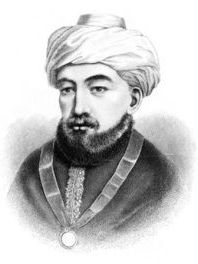
Maimonides
Physician. Philosopher. A restless encounter between reason and faith.
Read the story + sources →
Moses ben Maimon, the Rambam, put Jewish law into the vast structure of the Mishneh Torah. In The Guide of the Perplexed, he wrestled with philosophy, revelation and the limits of what we can know about G-d. He worked within Jewish tradition while engaging the intellectual world around him. Serious faith could make room for serious questions.
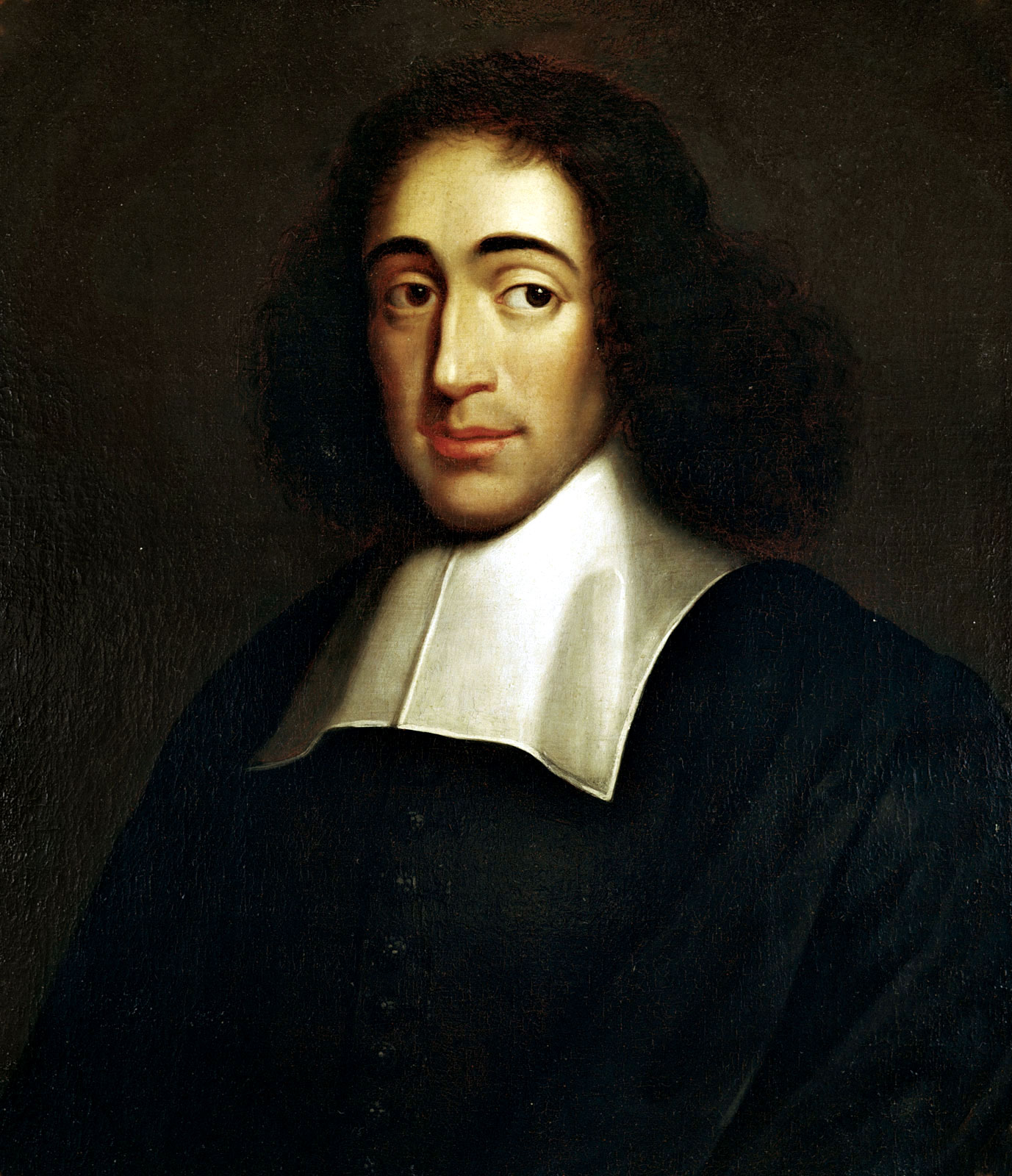
Baruch Spinoza
Questions his own community could not contain.
Read the story + sources →
Spinoza pushed the questions so far that Amsterdam’s Portuguese-Jewish community expelled him in 1656. His philosophy challenged conventional understandings of G-d, Scripture and religious authority. He belongs here without pretending he agreed with this chapter’s theology. A history of Jewish thought that leaves out its most difficult dissenters would be a pretty incurious history.

Henrietta Szold
Education. Care. A life turned toward others.
Read the story + sources →
Szold helped build immigrant adult education in Baltimore, founded Hadassah, and worked to develop health, education and social services in Palestine. Her later work helped rescue and care for thousands of Jewish children fleeing Europe. Here is another kind of influence: organizing the practical systems that allow someone else to survive, learn and have a future.

Theodor Herzl
A political idea made into a movement.
Read the story + sources →
Herzl helped turn a demand for Jewish national self-determination into an organized international political movement. He published The Jewish State in 1896 and convened the First Zionist Congress in Basel the following year. He was neither the first Zionist nor the only voice. His contribution was to organize, negotiate and insist that the question required political action.

Golda Meir
Building a state. Carrying its contradictions.
Read the story + sources →
Meir’s route to leadership ran through labor organizing, diplomacy and cabinet office before she became Israel’s prime minister in 1969. She exercised power in a political world dominated by men. Her record also demands scrutiny, especially the failures surrounding the 1973 war. Putting someone on these pages does not place their decisions beyond argument.
Israel Ministry of Foreign Affairs: biography · University of Wisconsin–Milwaukee Libraries

Chaim Weizmann
Science, diplomacy, and the work of building.
Read the story + sources →
Weizmann worked in laboratories as well as negotiating rooms. An organic chemist and Zionist diplomat, he helped establish the Daniel Sieff Research Institute in 1934, the institution that became the Weizmann Institute of Science. He later became Israel’s first president. Building a national home, in his work, included building the institutions where people could investigate and discover.
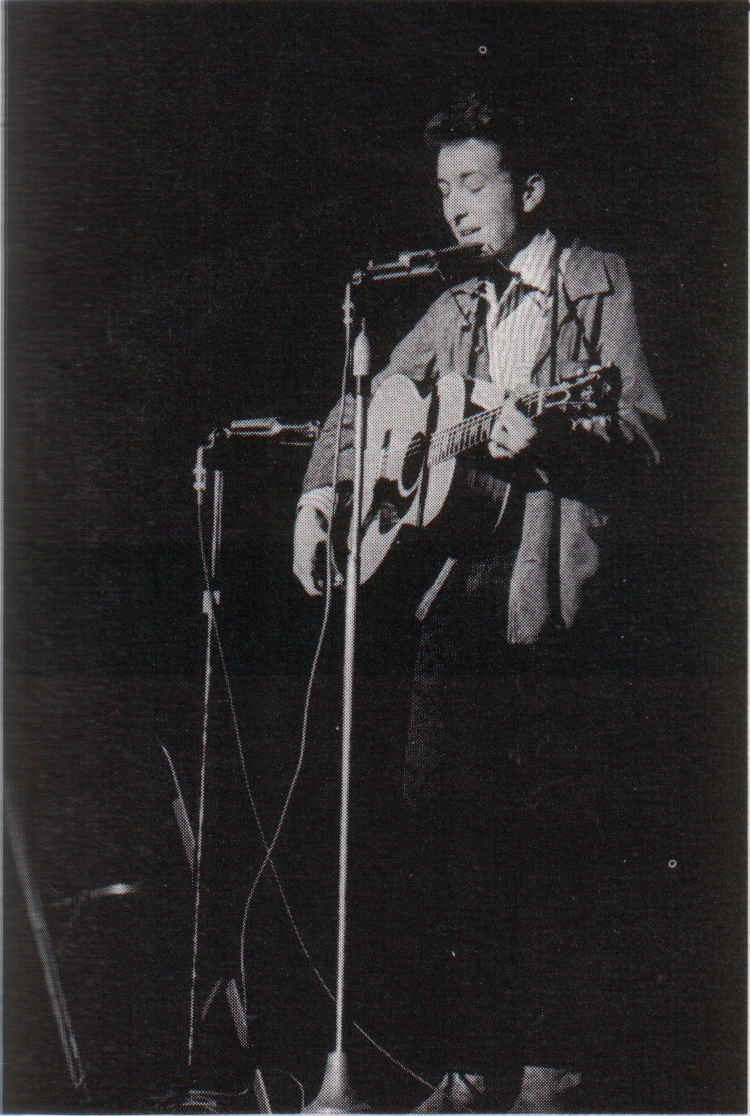
Bob Dylan
Songs that refused to stay in their lane.
Read the story + sources →
Dylan made the popular song a place for argument, surrealism, biblical echoes and questions that would not settle down. His move into electric music also challenged the expectations of his own folk audience. The 2016 Nobel Prize in Literature recognized his contribution to American song. Listen to the work; it resists being reduced to a single message.

Albert Einstein
Questioning the furniture of reality.
Read the story + sources →
Space and time seemed like the furniture of reality. Einstein asked whether the furniture was where we thought it was. His theories of relativity changed physics; his explanation of the photoelectric effect earned the 1921 Nobel Prize. These were precise scientific arguments, not simply a rebellious attitude. The questions mattered because he did the work.
COMEDY / MUSIC / FILM / CIVIL RIGHTS
A closer look.
Familiar titles, names in the credits, and a few stories beyond the stage. Open a card for the details and sources.
Broadway / 1959Rodgers & HammersteinThe Sound of MusicStory + sources
Richard Rodgers wrote the music; Oscar Hammerstein II wrote the lyrics. Howard Lindsay and Russel Crouse wrote the stage musical’s book. “Edelweiss” was written for the show, though it is often mistaken for an Austrian folk song.
Rodgers grew up in a Jewish family. Hammerstein had Jewish ancestry on his father’s side and was raised Episcopalian.
READ / EXPLORE Show history and credits ↗ The story of Edelweiss ↗ Rodgers: Yale University Press ↗ Family backgrounds ↗
Vaudeville / FilmThe Marx BrothersGroucho. Harpo. Chico. Zeppo. Gummo.Story + sources
The sons of Jewish immigrants, encouraged by their mother Minnie, began with a musical act on the vaudeville circuit. Comedy took over: Groucho’s verbal traps, Chico’s wordplay and Harpo’s physical chaos.
The brothers worked in different lineups as the act moved from vaudeville to Broadway and film. Their films include Duck Soup and A Night at the Opera.
READ / EXPLORE Smithsonian: their beginnings ↗ PBS American Masters: stage to screen ↗
Slapstick / SatireThe Three StoogesMoe. Larry. Curly. And Shemp.Story + sources
Moe, Curly and Shemp Howard were brothers; Larry Fine was born Louis Feinberg. All four were Jewish. Their screen comedy carried traces of vaudeville and Yiddish wordplay, with Curly and Shemp appearing in different eras of the act.
In January 1940, You Nazty Spy! cast Moe as a dictator in a thinly disguised parody of Hitler, before the United States entered the war.
READ / EXPLORE The Jewish side of the Stooges ↗ Official film history: You Nazty Spy! ↗ Larry Fine: official biography ↗
Television / 1950–1954Your Show of ShowsInside Sid Caesar’s writers’ room.Story + sources
Mel Tolkin, Lucille Kallen, Mel Brooks, Neil Simon and Danny Simon wrote for the live variety show. Sid Caesar, Imogene Coca, Carl Reiner and Howard Morris performed its sketches. Reiner also contributed in the writers’ room.
Kallen, the only female staff writer, worked closely with Tolkin. Their papers and interviews preserve the practical work behind the comedy: scripts, revisions, rehearsals and weekly deadlines.
READ / EXPLORE Sid Caesar’s Jewish comedy circle ↗ New York Public Library: Lucille Kallen papers ↗
Screenwriting / 1970sRobert TowneThe Last Detail. Chinatown. Shampoo.Story + sources
Towne wrote the screenplay for The Last Detail (1973), adapted from Darryl Ponicsan’s novel, and the original screenplay for Chinatown (1974). He co-wrote Shampoo (1975) with Warren Beatty.
Born Robert Schwartz and raised in a Jewish family in Southern California, Towne won the screenplay Oscar for Chinatown.
READ / EXPLORE Published screenplays: Grove Atlantic ↗ USC: Towne’s three-screenplay run ↗ Biography and Jewish background ↗
Television / ScreenwritingPaddy ChayefskyMarty. The Hospital. Network.Story + sources
Marty began as a 1953 live television play with Rod Steiger, then became a 1955 film with Ernest Borgnine. Chayefsky wrote both versions. He later wrote The Hospital (1971) and Network (1976), winning a screenplay Oscar for each of the three films.
Born Sidney Chayefsky in the Bronx, he grew up in a Jewish family that loved Yiddish theater.
READ / EXPLORE Television Academy: Chayefsky’s life and work ↗ Television Academy: film awards ↗ Network: film and documentary ↗
Screenwriting / DirectingHerman & Joseph MankiewiczCitizen Kane. All About Eve.Story + sources
Herman J. Mankiewicz and Orson Welles shared the screenplay credit and Oscar for Citizen Kane (1941). Herman’s younger brother, Joseph L. Mankiewicz, wrote and directed A Letter to Three Wives (1949) and All About Eve (1950).
The brothers were sons of German-Jewish immigrants. Joseph won Oscars for both writing and directing each of those two films.
READ / EXPLORE AFI: Citizen Kane ↗ Studio credits: All About Eve ↗ Joseph Mankiewicz: biography and family ↗
Theater / ScreenwritingDavid MametAmerican Buffalo. Glengarry Glen Ross.Story + sources
A junk shop and a planned robbery in American Buffalo. Salesmen competing for leads in Glengarry Glen Ross. Mamet wrote both plays; Glengarry Glen Ross won the 1984 Pulitzer Prize for Drama.
Raised in a Jewish family in the Chicago area, Mamet also wrote Oleanna, Speed-the-Plow and The Old Neighborhood.
READ / EXPLORE The Pulitzer Prizes: 1984 drama winner ↗ Grove Atlantic: plays and biography ↗ Mamet’s background ↗
Comedy / Theater / FilmMike NicholsNichols and May. The Graduate.Story + sources
Nichols performed comedy with Elaine May before directing plays and films. His first two features were Who’s Afraid of Virginia Woolf? (1966), adapted from Edward Albee’s play, and The Graduate (1967). He won the directing Oscar for The Graduate.
Born Michael Igor Peschkowsky to a Jewish family in Berlin, he reached New York with his younger brother in 1939, aged seven.
READ / EXPLORE American Film Institute: Nichols ↗ Vilcek Foundation: career and biography ↗
Tin Pan Alley / SongwritingIrving BerlinAlexander’s Ragtime Band. White Christmas.Story + sources
Berlin wrote both words and music for “Alexander’s Ragtime Band,” “God Bless America” and “White Christmas,” as well as the score of Annie Get Your Gun.
Born Israel Baline in the Russian Empire, he arrived in New York as a Jewish child. The Library of Congress holds his manuscripts, lyric sheets and correspondence.
READ / EXPLORE Library of Congress: Irving Berlin Collection ↗ Berlin and White Christmas ↗
Broadway / Concert HallGeorge & Ira GershwinI Got Rhythm. Of Thee I Sing.Story + sources
George composed and Ira wrote lyrics for “I Got Rhythm” and Of Thee I Sing. George also composed Rhapsody in Blue. The brothers were born in New York to Russian-Jewish immigrant parents.
Their surviving scores, drafts and correspondence can be explored in the Library of Congress collections.
READ / EXPLORE Library of Congress: George and Ira Gershwin ↗ Gershwin Collection: chronology and works ↗
Jazz / The BandstandGoodman. Wilson. Hampton.Clarinet. Piano. Vibraphone.Story + sources
Pianist Teddy Wilson joined Benny Goodman’s trio with drummer Gene Krupa; vibraphonist Lionel Hampton joined to form a quartet. Goodman, the son of Jewish immigrants, led an interracial small group at a time of widespread segregation.
Wilson and Hampton brought their own musical voices to the ensemble and continued substantial careers as bandleaders and soloists.
READ / EXPLORE National Endowment for the Arts: Teddy Wilson ↗ National Jazz Archive: Goodman interview ↗ Goodman and the Carnegie Hall concert ↗
Jazz / RecordingLion & Wolff. Blue Note.Monk. Powell. Blakey. Coltrane.Story + sources
Alfred Lion launched Blue Note in 1939 with recordings by Albert Ammons and Meade “Lux” Lewis. His childhood friend Francis Wolff, a refugee from Nazi Germany, joined him that year.
The German-Jewish partners recorded musicians including Thelonious Monk, Bud Powell, Art Blakey, Horace Silver and John Coltrane. Wolff also photographed the sessions.
READ / EXPLORE Blue Note: the label’s beginnings ↗ The Francis Wolff photographs ↗ Documentary: Beyond the Notes ↗
Blues / Rhythm & Blues / RockThe Chess BrothersMuddy Waters. Etta James. Chuck Berry.Story + sources
Polish-Jewish immigrants Leonard and Phil Chess ran the Chicago label that recorded Muddy Waters, Howlin’ Wolf, Little Walter, Chuck Berry, Bo Diddley, Etta James and Koko Taylor.
Willie Dixon wrote songs, played bass and worked as a producer and arranger. The recordings connect the label’s business history with the musicians’ songwriting and performances.
READ / EXPLORE Rock & Roll Hall of Fame: Leonard Chess ↗ Chess Records: Muddy Waters and Willie Dixon ↗ Phil Chess: family and career ↗
Hip-Hop / ProductionRubin. Simmons. Def Jam.LL Cool J. Beastie Boys. Public Enemy.Story + sources
Rick Rubin and Russell Simmons launched Def Jam together in 1984. LL Cool J, the Beastie Boys and Public Enemy recorded for the label. Rubin and Simmons also produced Run-DMC’s Raising Hell, released on Profile Records.
Rubin, a Jewish producer, entered a scene already built by Black and Latino artists and audiences. DJ Jazzy Jay, T La Rock and producer Larry Smith are part of the early history behind these records.
READ / EXPLORE Rock & Roll Hall of Fame: Rick Rubin ↗ Library of Congress: Raising Hell ↗ Def Jam’s early years ↗
Civil Rights / SelmaAbraham Joshua HeschelSelma to Montgomery, March 1965.Story + sources
Rabbi Abraham Joshua Heschel answered Martin Luther King Jr.’s call for religious leaders to join the voting-rights march. Afterwards, he described the experience: “I felt my legs were praying.”
Heschel’s participation was one part of a Black-led campaign sustained by local organizers, churches and national civil-rights groups.
READ / EXPLORE Stanford’s King Institute: Heschel ↗ Jewish Theological Seminary: life and work ↗
Freedom Summer / 1964Chaney. Goodman. Schwerner.James. Andrew. Michael.Story + sources
On June 21, 1964, members of the Ku Klux Klan murdered civil-rights workers James Chaney, Andrew Goodman and Michael Schwerner in Mississippi. Chaney was a Black Mississippian. Goodman and Schwerner were white Jewish New Yorkers.
The three had visited the burned Mount Zion Church while working in the Freedom Summer campaign for Black civil rights and voting access.
READ / EXPLORE FBI: the Mississippi Burning case ↗ Jim Crow Museum: the three men ↗ Goodman and Schwerner: background ↗
Education / The Segregated SouthRosenwald. Washington. Communities.Schoolhouses, teachers’ homes and workshops.Story + sources
Julius Rosenwald, a Jewish businessman, partnered with educator Booker T. Washington on a school-building program for Black children in the segregated South. It supported more than 5,000 schools, teachers’ homes and shop buildings.
Rosenwald supplied matching grants. Black families and communities contributed money, land and labor; public funds also helped finance construction.
READ / EXPLORE National Park Service: Rosenwald Schools ↗ Library of Congress: school resources ↗ Julius Rosenwald: biography ↗
Sources open in a new tab.
Portrait sources & credits
Original photographs and historical portrait reproductions, cropped and presented as a monochrome paper collage. Maimonides is a later depiction, not a verified contemporary likeness. These figures are presented across different eras and viewpoints, not as endorsers of this website.
- Bob Dylan: St. Lawrence University yearbook / Joe Gratz; CC BY 2.0. License.
- Albert Einstein: Harris & Ewing, 1921; Smithsonian NPG; CC0. License.
- Maimonides: Blaisio Ugolino, 1744 later depiction; public domain.
- Baruch Spinoza: Anonymous historical painting, c.1665; public domain.
- Theodor Herzl: Carl Pietzner, 1896; public domain.
- Golda Meir: Marion S. Trikosko, 1973; Library of Congress; public domain.
- Chaim Weizmann: Robert Sennecke, 1925; public domain.
- Henrietta Szold: Alexander Ganan, 1940; NLI Schwadron Collection; CC BY 3.0. License.