THE UNCURIOUS / 03 / WHY A HOMELAND
Why a Homeland
Memory and return. Refuge and responsibility. Start with the founding story, then follow the related essays and films.
Why Israel Matters → · What We Built → · Coming Home in Waves → · The evidence: The Record →
The Founding Narrative
How does a persecuted minority find its way back to its homeland? How do people scattered across the world, speaking different adopted languages, carrying generations of trauma, build a shared future?
We came carrying pogroms, persecution, and the memory of being tolerated until we weren't. We also came carrying different cultures, different politics, and that deeply inconvenient Jewish instinct to question everything.
The land wasn't empty. Other people lived there, with homes, families, and attachments of their own. Our return did not make them disappear. But their presence did not make our connection imaginary either.
Somehow, out of all that, we built an infrastructure, an economy, a political structure, and an army. We found the wherewithal and guts to say “Ad Kan.” Until here. No more. No more shall we be subject to the whims of another people's fantastical paranoia.
It reminds me of Nachshon ben Aminadav, who walked into the sea when the Egyptians were at his back and there was nowhere left to go. The midrash tells us the water didn't split at the shoreline. It split when the water reached his nose. Not a moment before. Because G-d, apparently, waits for full commitment. The early pioneers were Nachshon. They didn't walk into Israel because they had a plan. They walked in because behind them were pogroms, and ahead of them was a prayer they'd been saying for two thousand years. They didn't know how it would work itself out. They went anyway, water rising, and somewhere between their chin and their nose, the sea moved.
That's not a metaphor. That's a pattern. It's the same pattern every time. We have no good options, we move forward on faith and necessity in equal measure, and something opens that had no business opening. You can call it providence. You can call it the stubbornness of a people with nowhere else to go. I've come to believe those are the same thing.
The Diaspora Template
Consider what it takes to remain a people without a state. We built communities within communities. We maintained language, law, food, memory, and identity across borders and centuries. We did it in Alexandria and Baghdad and Córdoba long before anyone talked about a global village.
We weren't the only people to survive dispersal. The Roma walked a different but painfully familiar road: stateless, stigmatized, and still here. Other communities have kept their languages and their faiths far from home too. But this is the version I inherited: a book in our hands and a direction to face when we prayed.
We didn't just survive the diaspora. We learned how to carry a homeland.
History / watch the full lecture
Israelis: The Jews Who Lived Through History
Haviv Rettig Gur discusses Jewish history and Israeli identity.
Haviv Rettig Gur · Shalem College · Full lecture, embedded from the original upload. Press play to watch; audio never starts automatically.
Memory. Defiance. Imagination.


An artistic collage, not a documentary portrait gallery. Samson, Daniel and Isaiah are shown through later interpretations of biblical narratives. The Maccabees and Bar Kokhba are represented by later artworks; Masada by a nineteenth-century landscape. No image here is an authenticated ancient likeness.
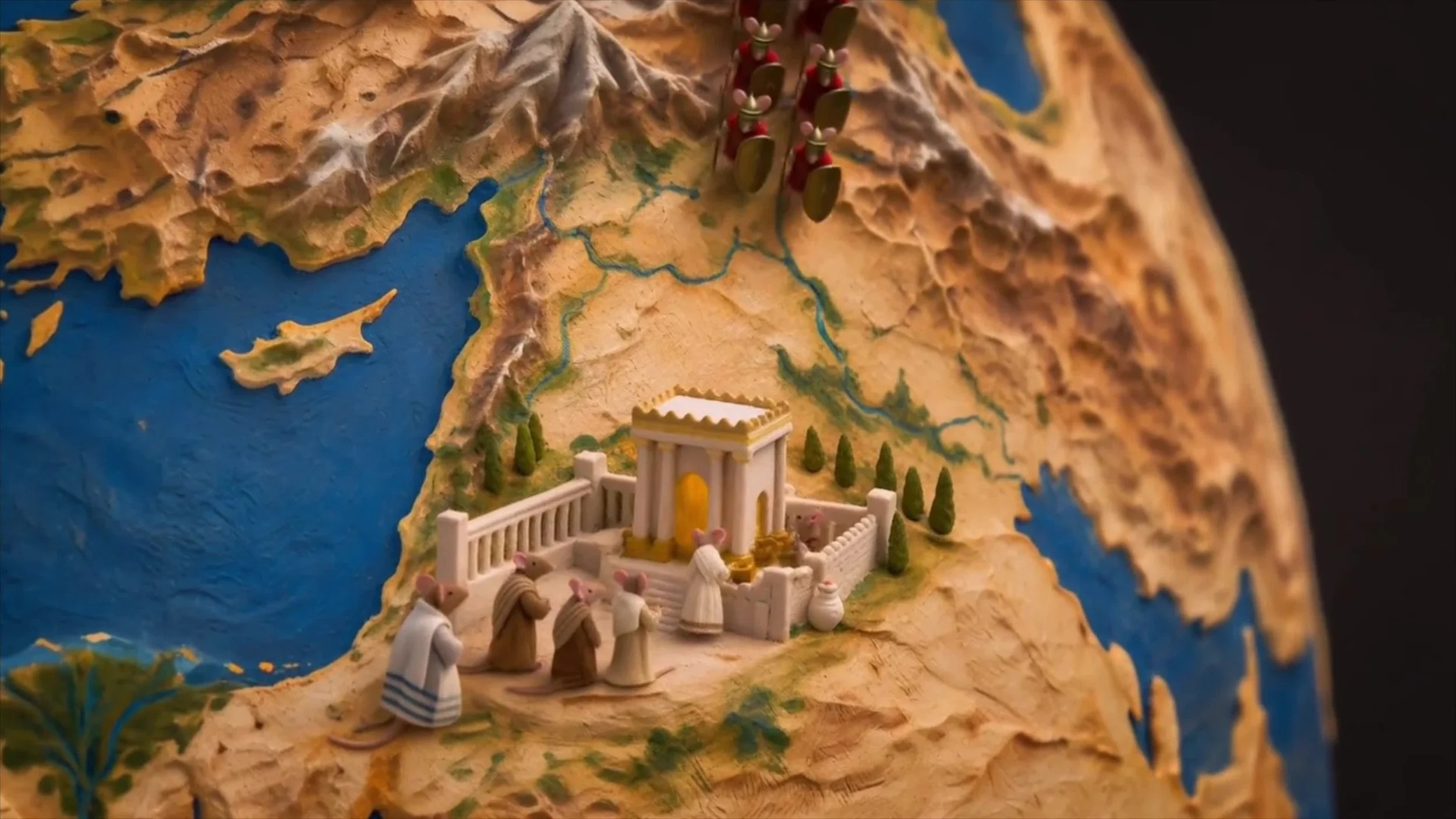
Masada · Animated dramatization · 20 seconds
Masada: memory and interpretation
Silent video. Press play to watch. Contains themes of siege and mass death.
This dramatization evokes the Roman siege of Masada in 73 or 74 CE; it is not documentary evidence of the events. Josephus’s account, the only surviving ancient narrative of the mass deaths, remains disputed; archaeologist Jodi Magness explains that archaeology cannot establish whether those deaths occurred as he described.